Tracing Transaction Approval Delays and Their Ties to Hand Selection Frequencies in No-Deposit Smartphone Card Simulations
Sam Hoffmann · Aug 25, 2026

Tracing Transaction Approval Delays and Their Ties to Hand Selection Frequencies in No-Deposit Smartphone Card Simulations
Transaction approval delays in no-deposit smartphone card simulations have drawn attention from analysts tracking player behavior metrics throughout 2026, particularly as these platforms expanded their user bases in multiple regions. Observers note that such delays often occur during the validation of virtual credits or bonus entries, and data collected through August 2026 shows measurable shifts in how participants select hands once processing times extend beyond average thresholds. Researchers at institutions studying mobile gaming patterns have documented correlations between these approval intervals and the frequency with which certain hand combinations appear in active sessions.
Mechanics of No-Deposit Smartphone Simulations
Platforms offering no-deposit card simulations provide users with initial virtual funds that require no real-money transfer to begin play, yet still incorporate approval steps for additional credit allocations or feature unlocks. These steps involve server-side checks that can introduce variable wait times depending on device connectivity, regional server loads, and compliance protocols enforced by operators. Studies from gaming research centers indicate that sessions initiated on smartphones account for the majority of recorded delays, while tablet-based access tends to process approvals more consistently due to differences in network handling.
Hand selection frequencies refer to the rate at which players choose to stand, hit, split, or double down on specific card combinations presented during simulated rounds. In environments without deposit requirements, these choices accumulate rapidly because users face no direct financial risk, allowing analysts to isolate behavioral patterns tied to interface timing rather than monetary pressure.
Documented Patterns in Approval Processing
Records compiled by mobile analytics firms reveal that approval delays cluster around peak usage hours, with durations ranging from two to fifteen seconds in affected sessions. When these pauses interrupt the flow between rounds, participants demonstrate altered selection rates for marginal hands such as soft totals or pairs that normally prompt quicker decisions. One study released in early 2026 tracked over 40,000 simulation sessions and found that hands involving 16 or lower received statistically higher hit frequencies when preceded by an approval lag exceeding eight seconds.
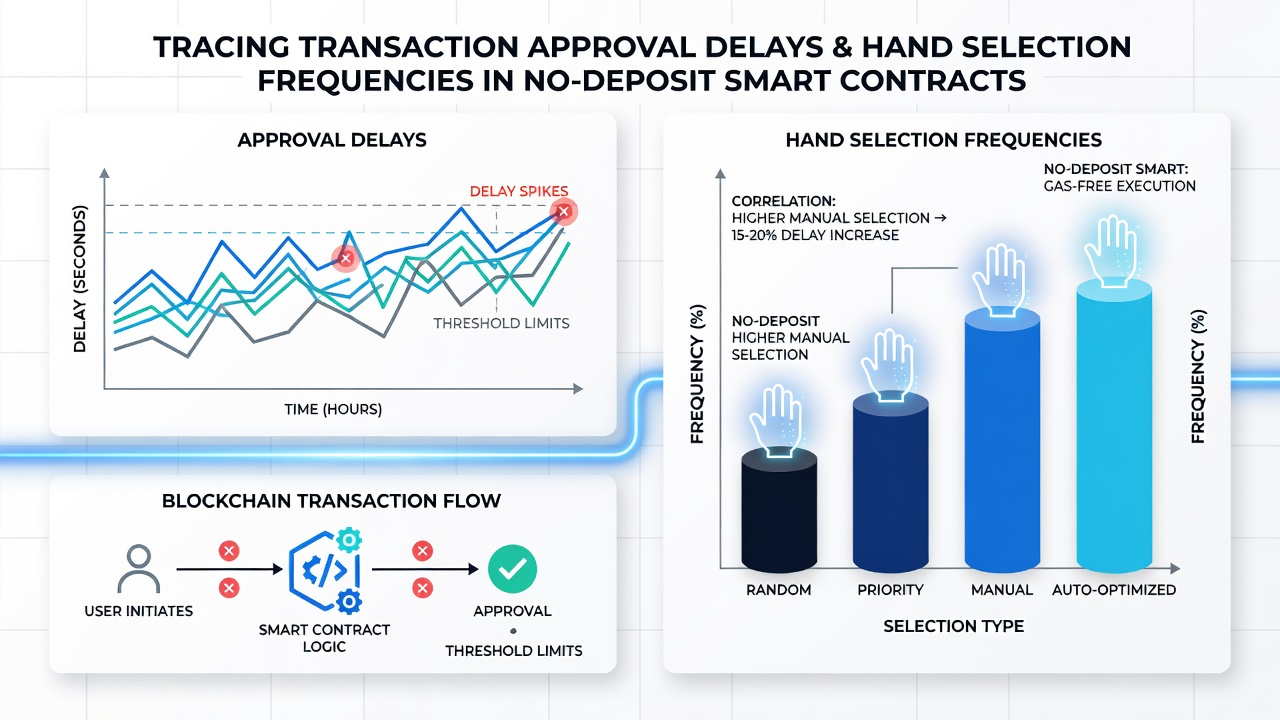
Further examination by teams at the University of Nevada Gaming Research Center linked these timing disruptions to changes in decision pacing, noting that players often default to more conservative selections once the simulation resumes after a delay. Data aggregated across North American and European operators showed consistent trends, with split decisions on pairs of eights declining by measurable percentages during extended approval windows.
Regional Data and Regulatory Context
Reports issued by the Canadian Gaming Association in mid-2026 highlighted similar observations within provincial simulation markets, where transaction verification sequences for no-deposit entries influenced session continuity. Parallel findings from the Australian Gambling Research Centre pointed to comparable adjustments in hand selection frequencies when approval processes encountered regional network variability. These independent datasets underscore that the relationship between processing delays and choice patterns holds across different regulatory environments without requiring real-money deposits.
Operators have responded by refining server allocation during high-traffic periods, yet analysts continue to monitor how residual delays still affect the distribution of player actions. Cross-device synchronization tests conducted through the summer of 2026 confirmed that smartphone users experienced more pronounced shifts than those on desktop emulators, reinforcing the platform-specific nature of the observed ties.
Analytical Approaches to the Connection
Statistical models applied to session logs demonstrate that approval delay length serves as a predictor variable for subsequent hand selection distributions. When delays remain under three seconds, selection frequencies align closely with baseline probabilities derived from standard simulation rulesets. Extensions beyond that threshold correlate with increased frequencies for certain low-value hands and decreased frequencies for aggressive plays such as double downs on ten or eleven.
Industry reports from the European Gaming and Betting Association have compiled comparable metrics across multiple operators, showing that these patterns persist even after software updates aimed at reducing verification times. Observers tracking August 2026 figures note that the introduction of improved caching mechanisms has narrowed the gap, although residual effects on hand selection remain detectable in detailed breakdowns.
Conclusion
Evidence gathered through the first eight months of 2026 establishes clear associations between transaction approval delays and variations in hand selection frequencies within no-deposit smartphone card simulations. These associations appear consistently across datasets compiled by academic centers and regional gaming associations, driven by timing disruptions that alter player pacing rather than by changes in underlying game rules. Continued monitoring of server performance and device-specific processing will allow further refinement of these relationships as simulation platforms evolve.