31 May 2026
Sweepstakes Casinos Adjust to 2026 Market Contractions From State Legislation

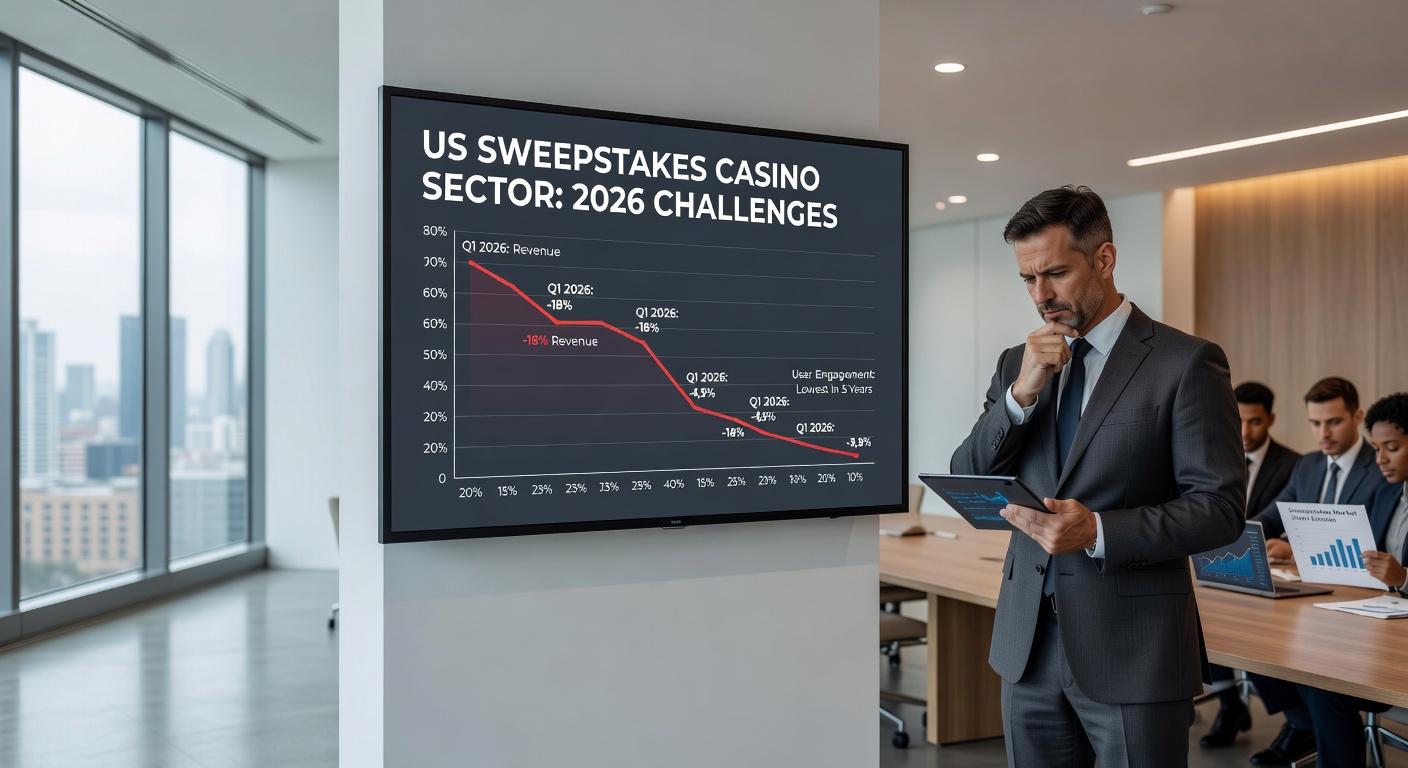
The US sweepstakes casino sector entered 2026 with operators confronting reduced market access after several states enacted new restrictions that trimmed available revenue streams, and those who've tracked the industry note how California’s Assembly Bill 831 took effect on January 1 while Indiana’s House Bill 1052 followed with enforcement set for July 1 after its signing in March. Observers point out that the California measure alone removed an estimated one-fifth of national sweepstakes casino revenue, which forced companies to recalibrate operations across remaining jurisdictions while Virtual Gaming Worlds, the parent of Chumba Casino and LuckyLand Slots, initiated portfolio adjustments that include new brand launches without dual-coin mechanics and exits from multiple states.
California Legislation Alters Revenue Landscape
Assembly Bill 831 introduced provisions that restricted sweepstakes casino activities in California starting the first day of 2026, and data from industry tracking shows this change eliminated roughly twenty percent of nationwide operator income because the state previously represented one of the largest player bases. Those monitoring legislative impacts explain that the bill targeted specific promotional mechanics common in sweepstakes models, which compelled operators to remove certain offerings rather than risk non-compliance, and figures reveal that companies responded by shifting marketing budgets toward states where rules remained more permissive during the opening months of the year.
Indiana Bill Adds Timeline Pressure
House Bill 1052 received approval in March 2026 and set enforcement for July 1, creating a mid-year deadline that operators had to meet while already navigating the earlier California changes, and reports indicate this sequencing left limited room for gradual adjustments. Experts who follow state gaming policy describe how the Indiana measure focused on sweepstakes casino operations in a way that mirrored restrictions seen elsewhere, prompting Virtual Gaming Worlds and similar firms to review their presence in additional markets beyond the two highlighted states, while payment processing teams accelerated updates to withdrawal systems to maintain compliance and user trust through cleaner transaction flows.
Operator Responses Include Brand and Portfolio Shifts
Virtual Gaming Worlds moved forward with several concrete changes that included the introduction of Just Slots as a new brand built without dual-coin mechanics, and people familiar with the company’s strategy note that this approach allowed continued operation in restricted environments by simplifying the product structure. The firm also reduced its footprint in multiple states where new rules increased operational costs, which freed resources for marketing campaigns that emphasized responsible play features and streamlined withdrawal processes, and those adjustments occurred alongside broader industry efforts to highlight compliance in player communications during the spring of 2026.
Marketing teams across affected operators redirected efforts away from restricted regions toward remaining markets, and data shows increased investment in responsible gaming tools that align with state expectations while supporting player retention. Payment departments focused on faster, more transparent withdrawal handling as a direct response to regulatory scrutiny, which helped maintain operational continuity even as overall market size contracted.
Focus on Compliance and Player Protections
Operators placed greater emphasis on responsible play initiatives during the first half of 2026 as a core part of their adaptation strategy, and industry associations tracking these developments report that companies introduced enhanced self-exclusion options along with clearer game information to meet both regulatory and player expectations. Virtual Gaming Worlds highlighted clean withdrawal processes as a priority area, which involved technical updates that reduced processing times and improved verification steps without adding friction for users in permitted states.
Portfolio reviews extended beyond single brands to encompass entire catalogs, and researchers who examined operator filings note that several companies eliminated or modified titles containing dual-coin elements while introducing alternatives designed for narrower regulatory windows. These moves occurred alongside ongoing monitoring of legislative activity in other states, where similar bills remained under discussion as of May 2026.
Market Contraction and Strategic Adjustments
The combined effect of the California and Indiana measures produced measurable shrinkage in available markets for sweepstakes casinos, and analysts who reviewed revenue reports indicate that operators accelerated geographic diversification efforts within remaining legal frameworks. Virtual Gaming Worlds executed exits from additional states where compliance costs outweighed projected returns, which allowed reallocation of development resources toward the new Just Slots brand and related products.
Payment system refinements continued through the spring, with teams testing updated processes that prioritized speed and clarity for withdrawals, and these changes aligned with broader responsible play messaging that operators deployed across platforms. Data from the period shows sustained player activity in jurisdictions that avoided new restrictions, although overall sector volume reflected the one-fifth national reduction tied to California alone.
Conclusion
By May 2026 the sweepstakes casino sector had implemented multiple layers of response to the state-level restrictions introduced earlier in the year, and companies such as Virtual Gaming Worlds demonstrated concrete steps through brand creation, market exits, marketing realignment, and enhanced compliance features. The California and Indiana bills established clear precedents that shaped operational planning, while ongoing adjustments to portfolios and payment systems supported continuity in the remaining available markets.