2 Jun 2026
How Cryptocurrency Transactions Shape Session Management Tactics in Portable Blackjack Environments
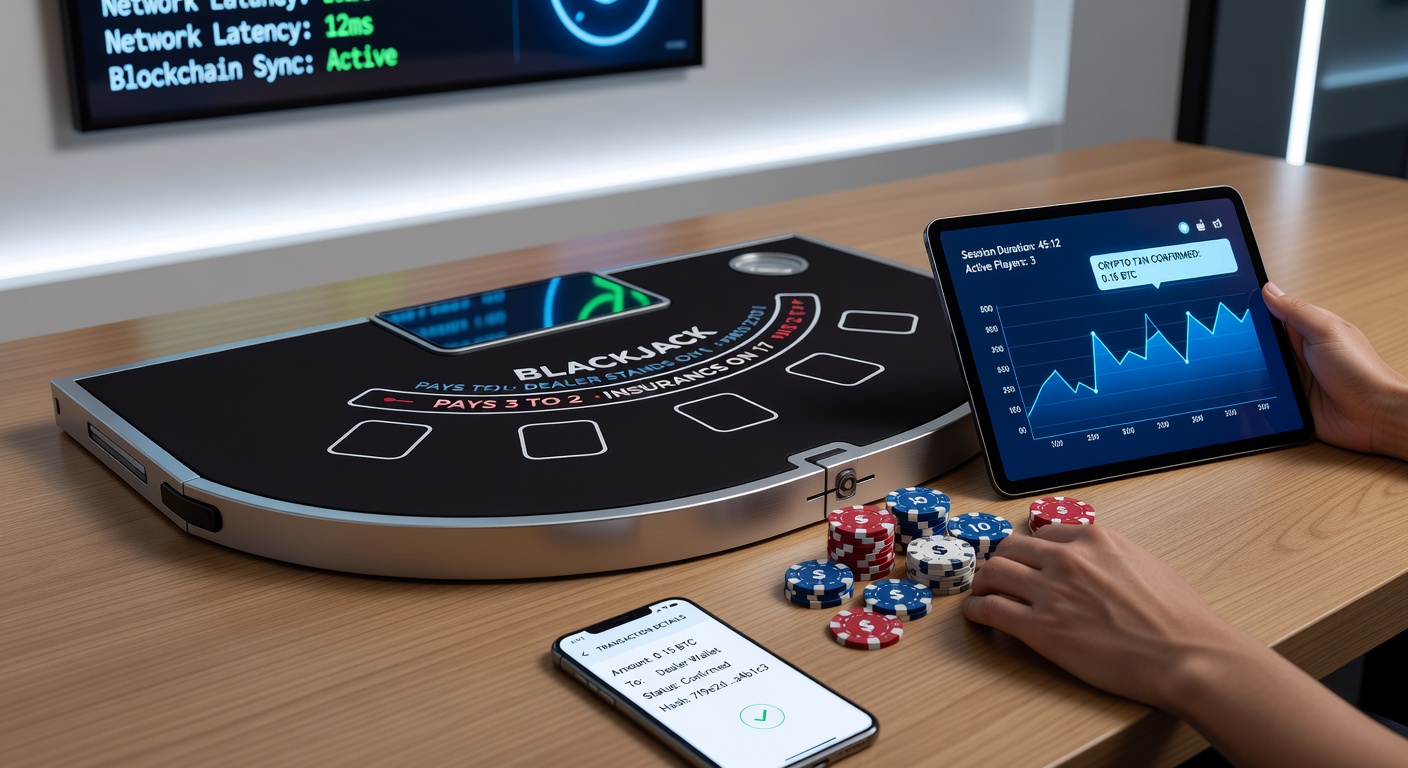
Portable blackjack environments have seen notable shifts as cryptocurrency transactions integrate into mobile platforms, and observers note that these changes influence how players structure their play sessions across devices. Data from industry reports indicate that faster transaction processing allows for more immediate adjustments to bankrolls during live dealer rounds, while blockchain confirmations create distinct timing patterns compared to traditional payment methods. Researchers have documented these patterns through analysis of transaction logs from various operators, showing that crypto enables quicker entry and exit points without the delays associated with bank transfers or card processing.
Transaction Velocity and Real-Time Bankroll Adjustments
Cryptocurrency networks process deposits and withdrawals in minutes rather than days, and this velocity directly affects session planning in portable blackjack apps where players often switch between tables or devices mid-play. Studies from academic sources reveal that users who rely on digital assets tend to maintain shorter but more frequent sessions because replenishing funds happens without waiting periods, whereas those using conventional payments extend sessions to avoid repeated verification steps. Experts at institutions tracking gaming trends point out that wallet integrations in apps allow automatic balance updates, so players can respond to winning or losing streaks by adjusting bet sizes on the fly without interrupting the flow of hands.
Portable environments add another layer since location-based features sometimes interact with transaction approvals, and data shows that users in regions with strong mobile networks complete crypto transfers more reliably during travel. This reliability encourages tactics such as setting micro-limits per session that can be topped up instantly, rather than committing larger amounts upfront as a safeguard against processing lags.
Security Protocols Influencing Session Duration
Blockchain ledgers provide transparent yet pseudonymous records, and operators have adapted their session management tools to incorporate multi-signature wallets and time-locked withdrawals that prevent rapid fund movements after certain thresholds. According to figures from the Pennsylvania Gaming Control Board, platforms incorporating these features report fewer instances of extended play sessions exceeding three hours because automated alerts trigger when cumulative crypto outflows reach predefined markers. Players therefore adopt segmented approaches, dividing play into discrete blocks separated by wallet checks that verify transaction status before resuming.
What's interesting is how private key management intersects with mobile security settings, since lost access to a wallet can halt an entire session until recovery protocols activate. Those who've studied user behavior in portable blackjack note that many now schedule shorter sessions aligned with backup verification windows, ensuring they can exit without funds locked during network congestion periods common in peak hours.

Regulatory Developments Around Mid-2026 and Their Impact
By June 2026 several jurisdictions had updated guidelines on digital asset usage in gaming, and these updates prompted operators to refine session timers and deposit caps for crypto users specifically. Reports compiled by the Australian Gambling Research Centre highlight that new compliance layers require platforms to log transaction hashes alongside gameplay data, which in turn influences how portable apps display real-time expenditure trackers to users. Players adapt by incorporating these logs into their own review processes, often pausing sessions to cross-reference blockchain activity before committing to additional rounds.
Yet the changes also opened avenues for cross-border play where currency conversion happens automatically through stablecoins, and evidence suggests this reduces friction for international users who previously managed multiple fiat accounts. Session tactics now frequently include monitoring exchange rate fluctuations during longer portable sessions, with some apps integrating live price feeds to help maintain consistent bet values across volatile periods.
Adoption Patterns and Tactical Variations
One study revealed that regions with higher crypto penetration, such as parts of Southeast Asia and Eastern Europe, show distinct session length distributions compared to North American markets where card payments still dominate. Observers tracking these differences found that crypto users in portable settings often employ a laddered approach, starting with small test transactions to confirm connectivity before scaling bets, whereas traditional methods encourage larger initial commitments. Industry organizations like the European Gaming and Betting Association have compiled comparative data indicating these patterns hold across both casual and high-volume players.
Portable blackjack environments further complicate matters because battery life and network handoffs can interrupt transaction confirmations, leading many to build buffer periods into their plans. Research indicates that apps offering offline mode with pending crypto syncs help mitigate these issues, allowing sessions to continue while settlements finalize upon reconnection.
Conclusion
Cryptocurrency transactions continue to reshape how portable blackjack sessions unfold through their speed, security features, and regulatory interplay, with evidence from multiple sources confirming measurable shifts in player behavior by 2026. Platforms respond with tailored tools that align transaction flows to gameplay mechanics, while users develop corresponding strategies around timing, limits, and verification steps. These developments reflect broader integration trends where digital assets become standard components rather than experimental add-ons in mobile gaming ecosystems.